
When something goes wrong during a stay, it’s obvious.
A cleaning issue.
A broken appliance.
A check-in problem.
These moments get attention.
They trigger messages, urgency, and quick fixes.
But they’re not what defines most guest experiences.
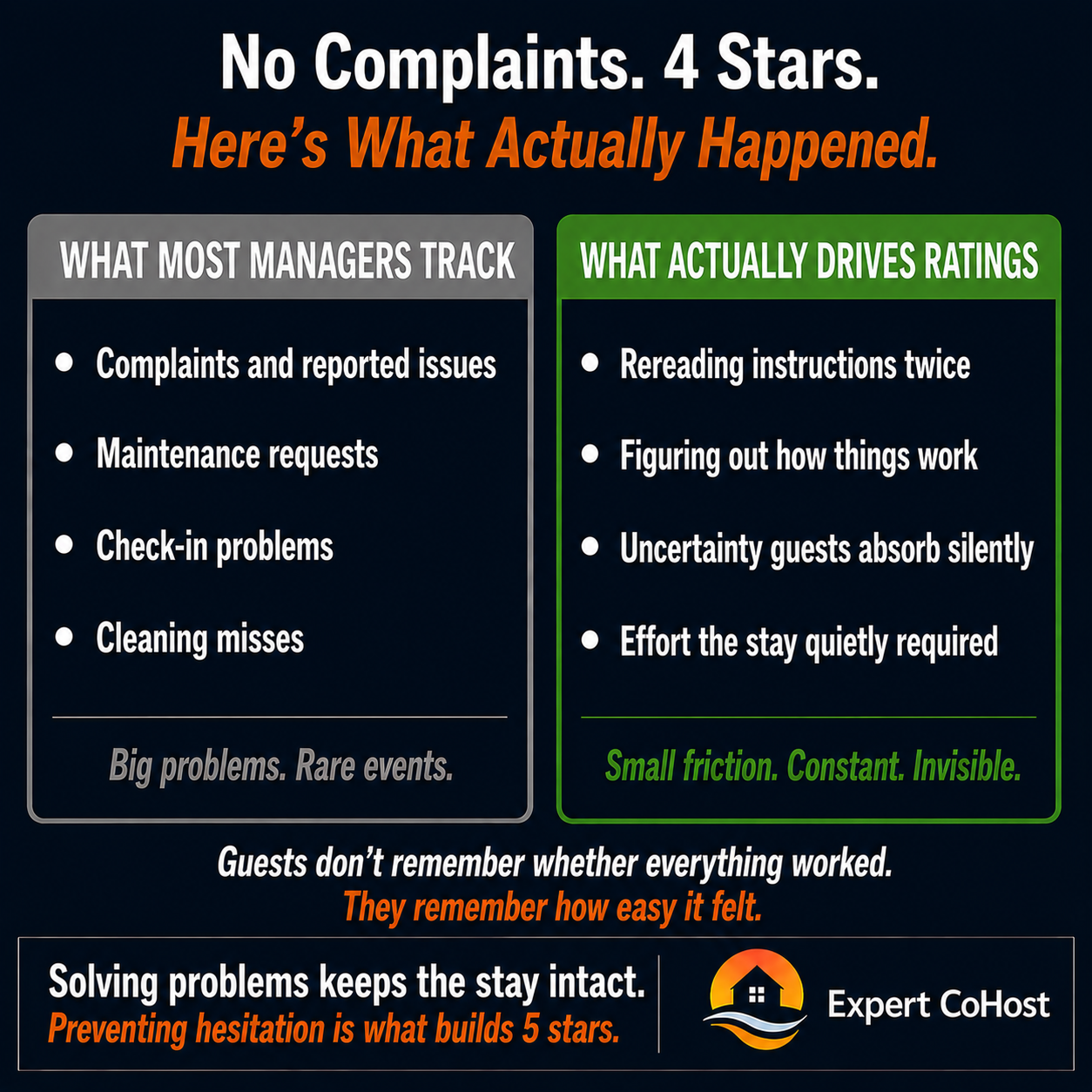
Big Problems Are Visible — and Rare
Serious issues:
- stand out immediately
- get reported quickly
- are usually resolved
They feel important because they’re disruptive.
But they don’t happen often enough to explain most performance differences between listings.
Small Confusion Happens Constantly
The more common issue is harder to see.
Small moments where guests hesitate:
- rereading check-in instructions
- double-checking which door to use
- wondering if something was missed
- figuring out how something works
Individually, these moments seem minor.
Collectively, they shape the entire stay.
Guests Don’t Report Confusion — They Absorb It
Guests rarely complain about small friction.
They:
- figure things out
- adapt quietly
- move on
From the host’s perspective, everything looks fine.
No complaints. No major issues.
But that doesn’t mean the experience felt smooth.
And That Feeling Shows Up Later
Not during the stay.
But after it.
In the form of:
- slightly less enthusiastic reviews
- lower likelihood of a 5-star rating
- subtle hesitation in recommendations
Nothing dramatic.
Just enough to matter over time.
Why This Is Easy to Miss
Small confusion doesn’t break anything.
The stay still “works.”
Guests still check out.
The calendar still fills.
But something is off.
The experience requires effort.
And effort reduces perceived quality—even when everything else is technically correct.
The Compounding Effect
This is where the real impact happens.
Small, repeated friction leads to:
- weaker review consistency
- lower guest confidence
- reduced pricing power over time
Not because of one issue.
Because of many small ones.
This Connects Back to Decision and Expectations
Earlier, we looked at how guests choose listings based on clarity.
That same principle carries into the stay.
When a listing is clear:
- guests arrive confident
- expectations are aligned
- fewer things feel uncertain
When it isn’t:
- small questions multiply
- friction increases
- the experience feels less effortless
The Real Cost
Big problems create spikes.
Small confusion creates drift.
And drift is harder to detect—but more damaging long-term.
The Shift
Most hosts focus on solving problems.
But strong performance comes from preventing hesitation.
Because guests don’t remember whether everything worked.
They remember how easy it felt.
What This Leads To
If small moments shape the experience…
And the experience shapes reviews…
Then performance isn’t driven by big fixes.
It’s driven by continuous refinement.
Which raises the final question:
Why do some Airbnbs keep improving over time—while others stay stuck, even when nothing seems wrong?